"Inclusion is not something we achieve through policy alone. It happens through everyday conversations, decisions and behaviours."
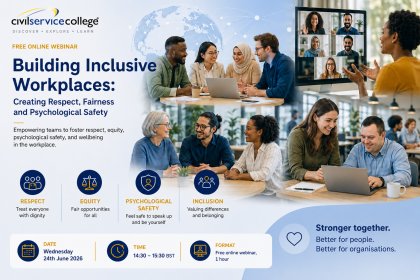
During our recent webinar on inclusion in the workplace, Ian Rose invited participants to explore a simple but important question: What does inclusion mean at work?
Participants shared a range of responses including fairness, belonging, empathy, respect and being heard. Ian reflected that inclusion is ultimately about ensuring everyone feels involved, valued and able to contribute while recognising and celebrating differences.
As the discussion developed, it became clear that inclusion is not simply about good intentions. It requires awareness, action and a willingness to challenge our assumptions.
One participant posed a thoughtful question:
"How do you think the ability to oil the wheels of inclusiveness differs between those who have faced difficulty being included and those who are perceived as being someone who falls slap bang in the middle of the white, working, heterosexual male in their forties who is entirely well meaning and does all they can to promote inclusivity?"
The discussion highlighted that inclusion benefits from both perspectives. Those with lived experience of exclusion bring valuable insight into barriers, while allies play an essential role by listening, learning and using their influence to create more inclusive environments.
Understanding the Barriers We Do Not Always See
Participants identified several barriers to inclusion including unconscious bias, lack of understanding, cliques, conflict avoidance and assumptions about others.
Ian shared a personal example of initially hesitating to recruit someone with a disability because he anticipated additional work and adjustments. Reflecting on the experience, he emphasised how easy it can be for assumptions to shape decisions and how important it is to see people as individuals rather than through preconceived ideas.
The conversation prompted another important audience question:
"Some biases are known, some are not. How do we encourage an environment where people feel comfortable talking about this? We need to know the unknowns."
The answer centred on creating cultures where people can discuss bias openly without fear of blame or judgement. Inclusion is not about achieving perfection. It is about developing awareness and creating opportunities to learn from one another.
Ian also shared how anonymising CVs during recruitment can help reduce unconscious bias and create fairer opportunities for candidates from diverse backgrounds.
Psychological Safety and Trust
A key theme throughout the webinar was psychological safety.
Drawing on the work of Amy Edmondson, Ian explained that psychological safety exists when people feel able to speak up, ask questions, challenge ideas and admit mistakes without fear of negative consequences.
Without psychological safety, inclusion becomes difficult to sustain. People may stay silent, withhold ideas or avoid raising concerns. Over time, this can affect trust, collaboration and innovation.
Ian described trust as something that must be built intentionally, introducing the concept of a "trust piggy bank". Every positive interaction, commitment kept and respectful conversation adds to that balance. Trust grows through reliability, credibility and rapport.
For inclusive teams, trust is not optional. It is foundational.
Feedback, Performance and Difficult Conversations
The discussion moved naturally into one of the most common leadership challenges: giving feedback.
One participant asked:
"How would you provide feedback when you have been asked to observe meetings and the team acknowledge a rocky relationship with stakeholders? Having observed three meetings now, it is evident there is a lot of learning needed, but how can we give it sensitively?"
Ian recommended approaching feedback through coaching rather than criticism. Instead of telling people what went wrong, leaders can encourage reflection through open questions and evidence-based observations.
Questions such as:
"What do you think worked well?"
"How do you think stakeholders experienced that discussion?"
"What could we do differently next time?"
can create a more constructive conversation and reduce defensiveness.
A related question explored how to support someone who may not recognise their own performance gaps:
"Ian, please could you talk a little more on your point around how to have a conversation with someone who thinks their performance is brilliant? It easily leads to a belief that there is a lack of trust and psychological safety if you try and address it."
Ian explained that psychological safety does not mean avoiding difficult conversations. Instead, it allows those conversations to happen respectfully and productively.
He introduced the 4S framework:
State of mind – approach the discussion with a constructive mindset.
Safely start – create the conditions for open dialogue.
Surface the issue – share observations and evidence objectively.
Share next steps – agree actions and support moving forward.
The aim is not to prove someone wrong, but to help them succeed.
Creating Inclusive Teams and Meetings
The webinar also explored practical ways to build inclusion into everyday workplace practices.
Participants discussed the differing needs of introverts, extroverts and neurodivergent colleagues and the importance of creating environments where everyone can contribute in ways that work for them.
One recommendation was to include a question on meeting invitations asking attendees how the event can be made accessible for them. This approach avoids singling people out while encouraging everyone to consider accessibility and inclusion from the outset.
The group also discussed hybrid meetings. Ian shared a practice where all participants, including those in the room, join using laptops and cameras. This helps create a more equitable experience for remote attendees and reduces the risk of virtual participants feeling excluded from discussions.
Staff networks were also highlighted as valuable spaces for support, connection and shared learning across organisations.
Equality, Equity and Leadership Commitment
Towards the end of the session, participants explored the distinction between equality and equity. Equality means treating everyone the same. Equity means recognising that people have different circumstances and providing the support, adjustments or resources they need to succeed.
As participants noted, equality may be "the same for all", while equity is about being "fair for everyone".
The conversation also addressed a challenge many organisations face:
"How do you tackle a senior leader who says there is a need for this type of approach but doesn't actually give it any focused time themselves?"
The discussion acknowledged that inclusion cannot be delegated. Policies and training are important, but meaningful cultural change depends on leadership behaviour.
When leaders actively engage, seek feedback and demonstrate inclusive behaviours, they reinforce the importance of inclusion across the organisation. When they do not, progress is often limited regardless of the policies in place.
Key Takeaways
- Inclusion starts with belonging. People need to feel valued, respected and heard.
- Bias requires awareness. Some biases are visible, while others require open conversations to uncover.
- Psychological safety enables inclusion. People contribute more effectively when they feel safe to speak up.
- Trust is built through consistent actions. Reliability, credibility and rapport strengthen teams.
- Feedback should be constructive and compassionate. Difficult conversations are most effective when approached with curiosity and evidence.
- Accessibility should be considered from the start. Inclusive design benefits everyone.
- Equity and equality are not the same. Fair outcomes often require different forms of support.
- Leadership matters. Inclusion becomes part of culture when leaders demonstrate commitment through action.
Closing Reflection
The webinar reinforced that inclusion is not a single initiative or policy. It is an ongoing practice of listening, learning and adapting. Every recruitment decision, team meeting, feedback conversation and leadership interaction shapes whether people feel included and able to contribute.
Creating inclusive workplaces requires commitment from everyone, but especially from leaders who set the tone for culture and behaviour. When people feel trusted, respected and valued, inclusion moves beyond intention and becomes part of how organisations work every day.