Moving from Experimentation to Capability
Artificial intelligence is already becoming part of everyday work across the public sector. The challenge now is less about whether people are using AI and more about how organisations can turn individual experimentation into safe, repeatable and measurable capability.
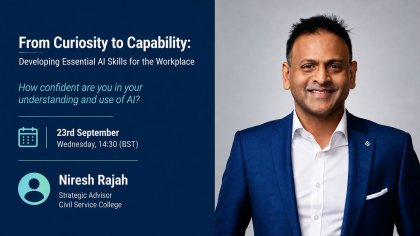
That was a central theme of our recent webinar with Niresh Rajah, Civil Service College's Strategic Advisor. Niresh brings more than 20 years of experience across data and analytics, artificial intelligence, regulation, automation, innovation and digital transformation, including senior leadership roles. His session focused on a practical question for public-sector organisations: how do you move from having access to AI tools to using them well?
The polls showed that adoption is already underway
The participant polls gave a useful snapshot of where people are on their AI journey. Almost half of attendees, 48%, said they were using AI tools in isolation, while 26% were still experimenting. A further 17% said they were implementing AI tools across their department or organisation, and 6% said they were training others and increasing adoption. Only 2% said they had not started.
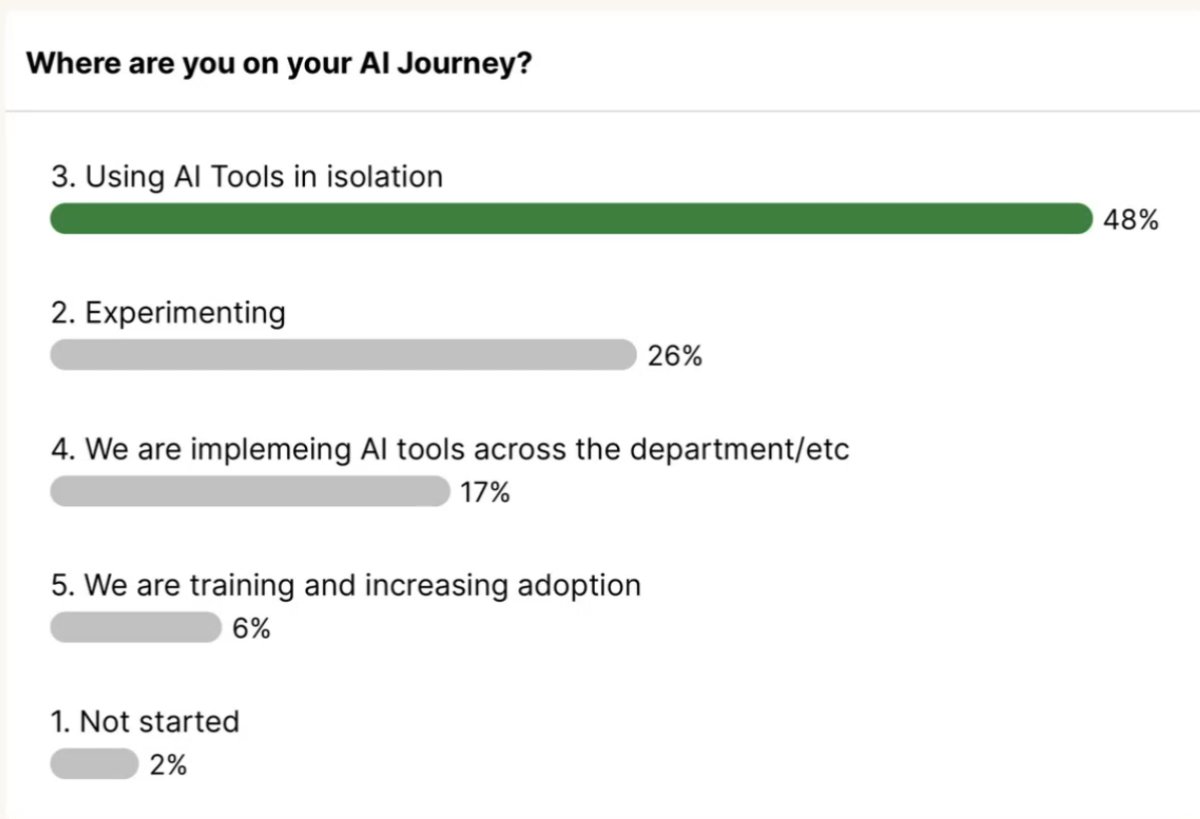
The message is clear: many public-sector teams are no longer at the starting line. However, individual use does not automatically create organisational capability. People may be using Copilot, ChatGPT or other tools regularly without having shared approaches, agreed guardrails or a clear way to assess whether the work is improving outcomes.
AI use is becoming part of the working week
A second poll explored how often participants use an AI tool for work. The largest group, 47%, said they use AI weekly. A further 19% fell into another regular-use category, while 16% had tried it a few times. Seven per cent use AI monthly, another 7% said they use it for most of the day, and 4% said they never use AI for work.
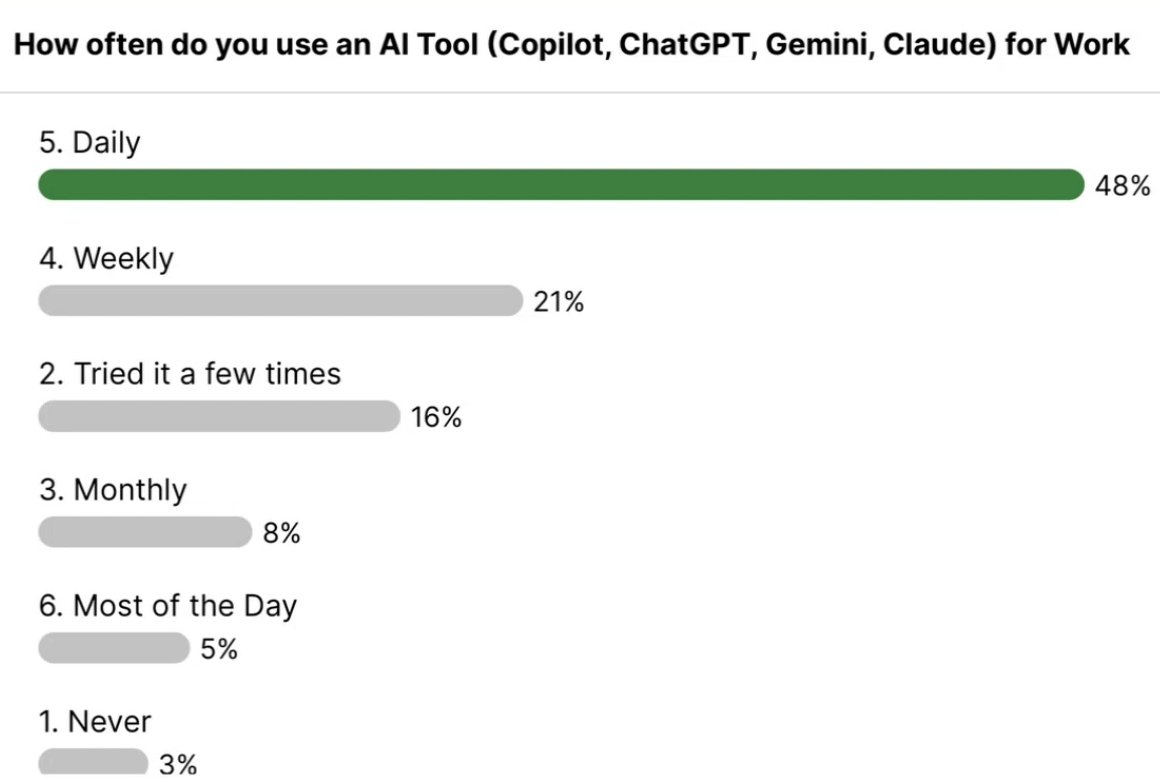
These results point to a workforce that is increasingly familiar with AI, but with very different levels of experience. That makes capability building important. Niresh distinguished curiosity from capability: curiosity is occasional, unguided use, whereas capability means using AI regularly on real tasks, checking outputs systematically, sharing what works and measuring results.
Training, governance and human judgement have to develop together
The webinar also explored why AI adoption cannot be treated simply as a technology project. Participants raised questions about black-box models, bias, HR applications, GDPR and hallucinations. Niresh emphasised that AI-generated information remains subject to existing data-protection principles and that organisations need to consider permissions, transparency, retention and confidentiality when deciding how AI can be used.
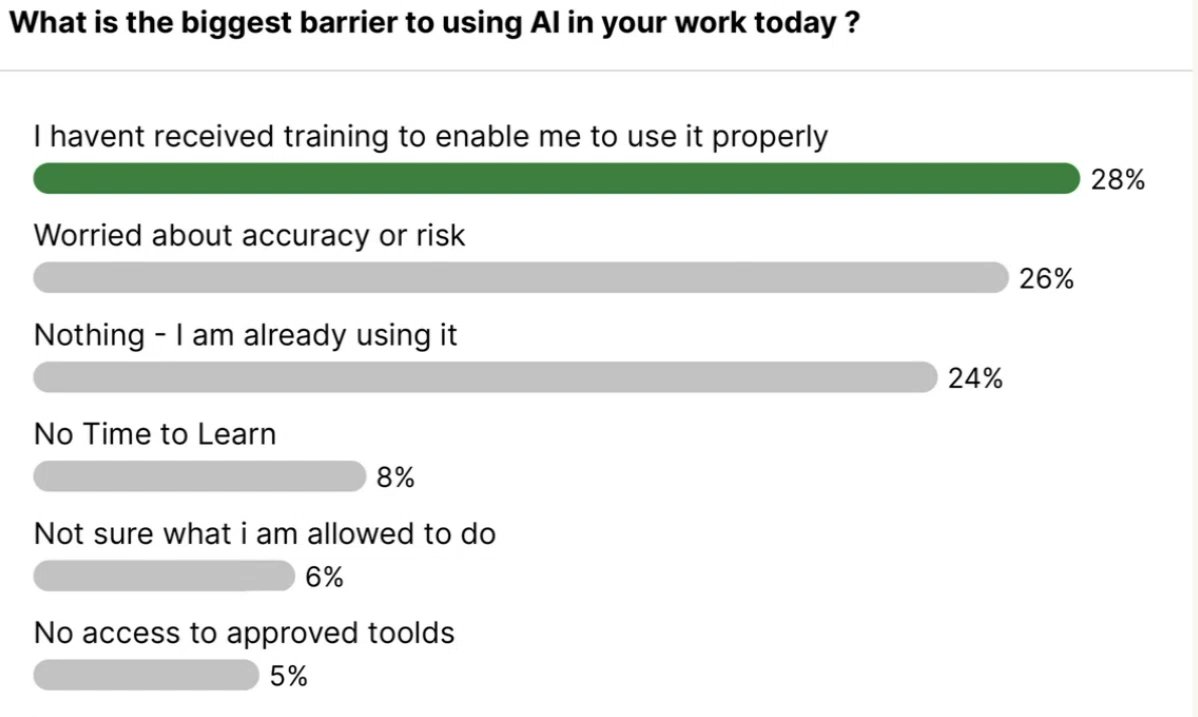
Human accountability was another consistent theme. AI can assist with drafting, analysis and decision-making, but it does not take responsibility for the final output. Where an AI-assisted result could affect people, public money or important decisions, meaningful human review and sign-off remain essential.
This is particularly relevant to hallucinations and inaccurate outputs. Niresh recommended a strong data foundation, appropriate ring-fenced datasets, subject-matter expertise and human review for consequential work. In other words, faster production is not the same as better decision-making.
Start with the task, not the tool
One of the most practical parts of the session was Niresh's approach to prompting and verification. His RTCF framework encourages users to define the Role, Task, Context and Format before asking AI to produce an answer. A vague request such as 'Summarise this' gives an AI system very little direction. A clearer brief can specify the audience, the purpose of the output, the particular issue to focus on and the format required.
But better prompting is only half the process. Niresh introduced the FACT check: verify facts and figures, assess cited sources, check audience and tone, make sure important information has not been omitted, and trace important claims back to trusted evidence. The first AI response should be treated as a draft, not as a finished piece of work.
From individual use to organisational capability
For leaders and managers, the final challenge is creating the conditions for people to practise safely. Niresh highlighted five practical mechanisms: protected time for AI practice, AI champions who can support colleagues, shared prompt and use-case libraries, approved environments for experimentation, and honest measurement of what works and what does not.
Even small steps can help. Departments could reserve regular time for practice, build structured learning into the first few months of adoption, and encourage teams to share successful workflows. Measurement should look beyond usage statistics to questions such as time saved, quality of outputs, staff confidence and user outcomes.
The webinar's core message was not to start by choosing a fashionable AI platform. Start with a real problem or task. Build the skills to use the tool well. Put sensible safeguards around it. Then measure whether it is making a meaningful difference.
For public-sector organisations, that approach offers a more practical route to responsible AI adoption: grounded in real work, supported by people and leadership, and strengthened through continuous learning and review.